Bridgeport Serial No. 1
Serial No. 1
The mill that started it all
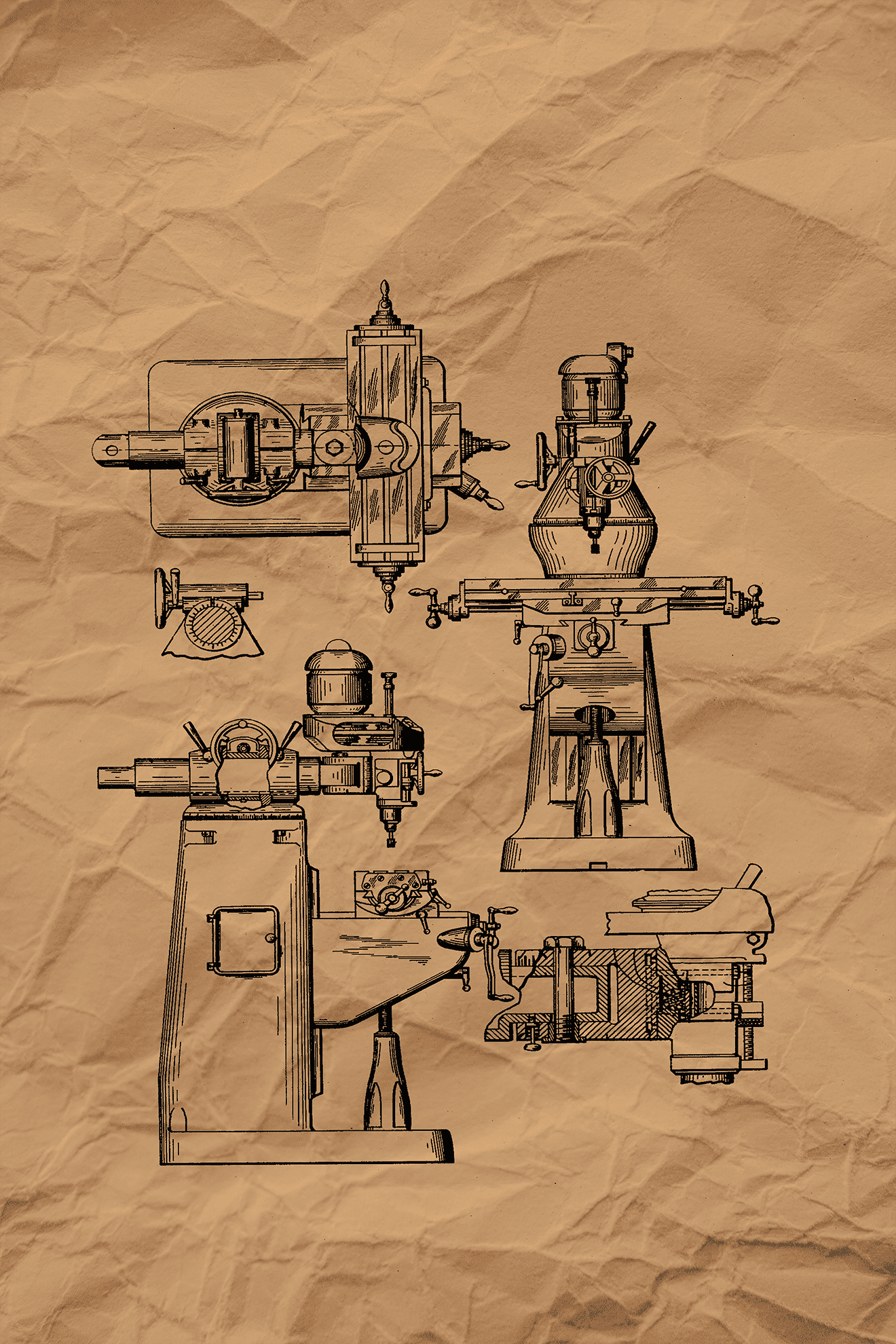
Sketched on a paper bag. Stamped by hand because the shop didn’t own a punch that size yet. Still standing at the American Precision Museum.
400,000+
Bridgeports built to date
$995
Price tag on the original, in 1938
1982
Year Serial No. 1 came to APM
Keep machines like this one running
Read the full story, or help preserve it
Serial No. 1 is one piece of a unique collection housed in an 1846 armory. Upkeep, restoration, and the people who explain machines like this one to visitors all take support.
Donate
Help the American Precision Museum preserve Serial No. 1 and the rest of the collection.
Where it began
Two immigrants and a paper bag
Rudolph “Rudy” Bannow left Sweden for the United States at 13. He finished grammar school in Holyoke, Massachusetts, then apprenticed as a patternmaker. He joined the Bridgeport Pattern & Model Works in 1923 and worked his way up the ranks. By 23 he was foreman. In 1927 he bought the place outright, using his savings and a $3,000 loan from his mother.
Magnus Wahlstrom, another Swedish immigrant and a toolmaker, had sold Bannow some wooden parts in 1928. The two hit it off. In 1929 they went into business together, and their original plan had nothing to do with milling machines.
An electric hedge clipper. That project got shelved once Bannow and Wahlstrom saw more promise in a self-contained, quarter-horsepower high-speed milling attachment. It shipped to Atlas Tool of Bridgeport in 1932, deep in the Great Depression, and sold well anyway.
In 1936, while out delivering a pattern (the firm was still in that business too), Bannow got the idea to build a whole machine around the head his shop already made. He sketched the turret milling machine right there, sitting in his half-ton truck, on a paper bag.
Machine No. 1 shipped on August 8, 1938, to Precision Castings Corp. in Syracuse, New York. The patent, No. 2,275,291, wasn’t granted until March 3, 1942, four years and 23 claims later.
Explore the machine
Five things most visitors miss
Hand-cut, not punched
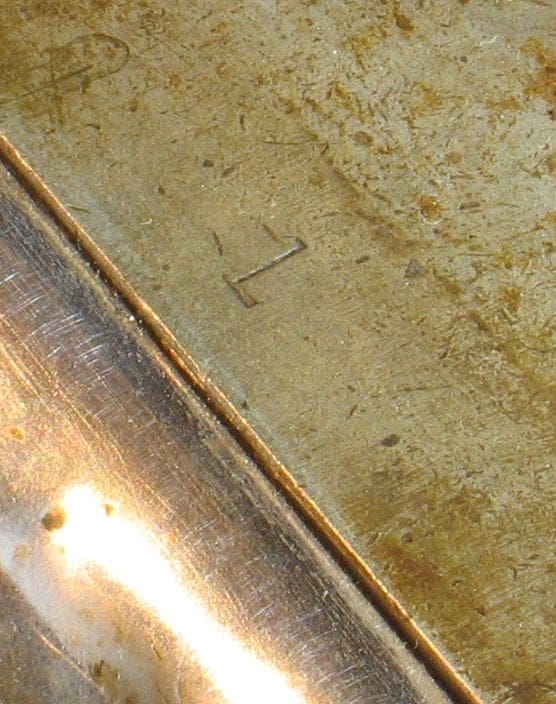
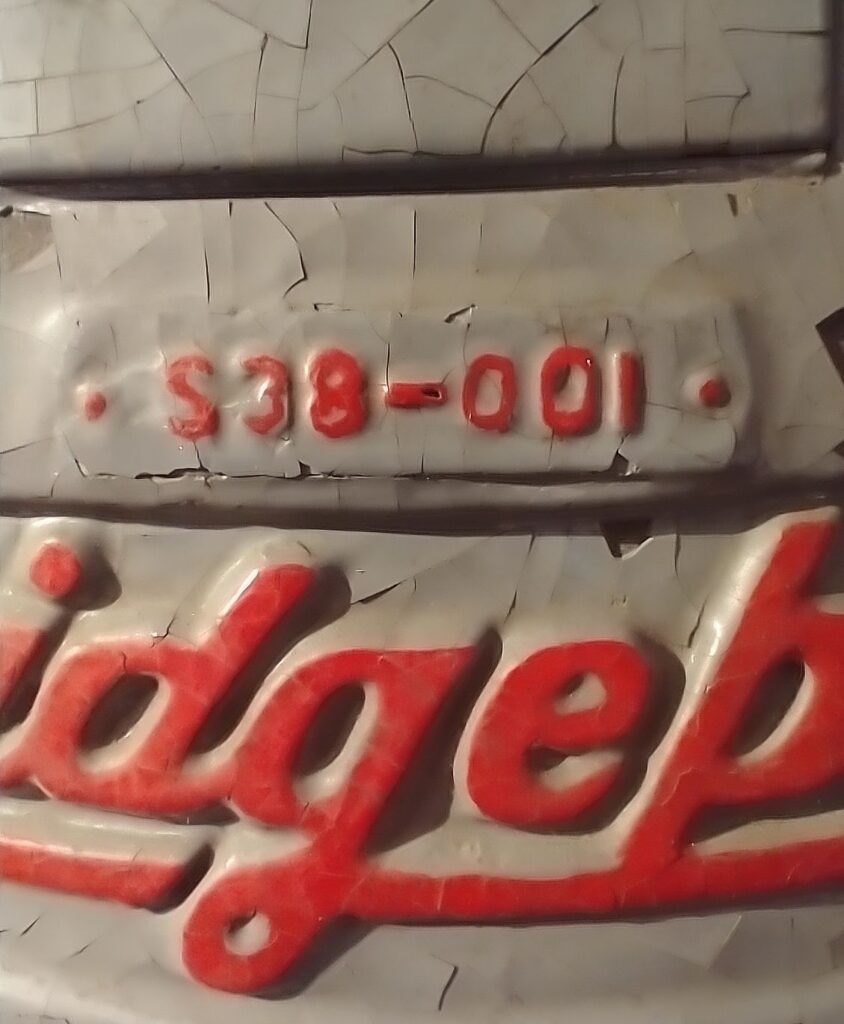
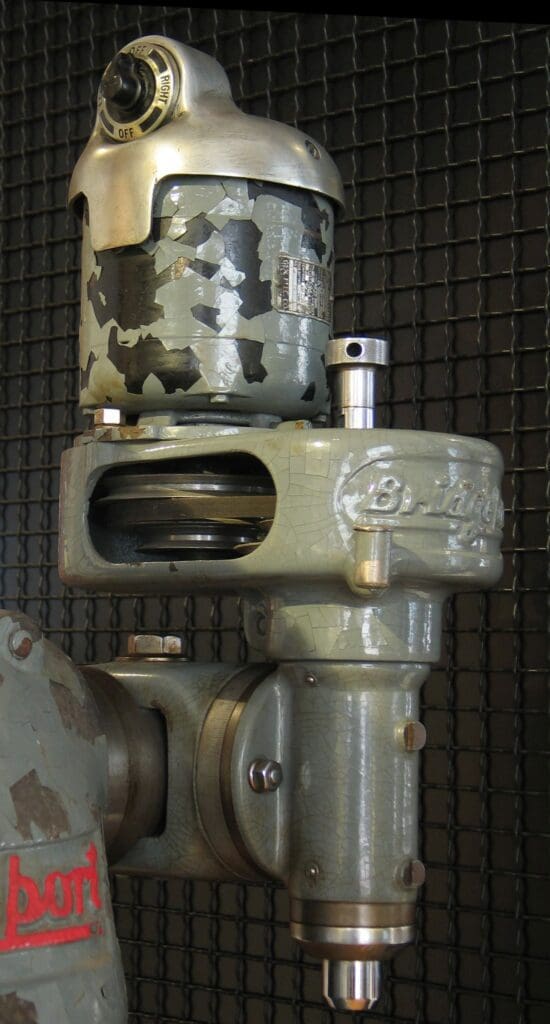
The number “1” is stamped into the top of the knee and both sides of the saddle. Look closely, especially under magnification, and it’s clear these weren’t made with a standard number punch. They were more likely cut by hand with a small chisel, possibly ground from an old cutting tool bit.
Why? Because in 1938, Bridgeport Pattern and Model Works probably didn’t own a set of number punches that large yet. The smaller numbers stamped on the head, by contrast, were made with a proper punch set.
“The machine is so basic that if somebody wants to start a tool and die shop, or a toolroom, or something similar, a Bridgeport is what he needs.”
Ernest H. Noren, Vice President, Bridgeport Machines Inc.
By 1970, industry writers were comparing the Bridgeport mill’s place in machine shops to the DC-3’s place in aviation: the standard everyone measured against, still working long after newer designs arrived.
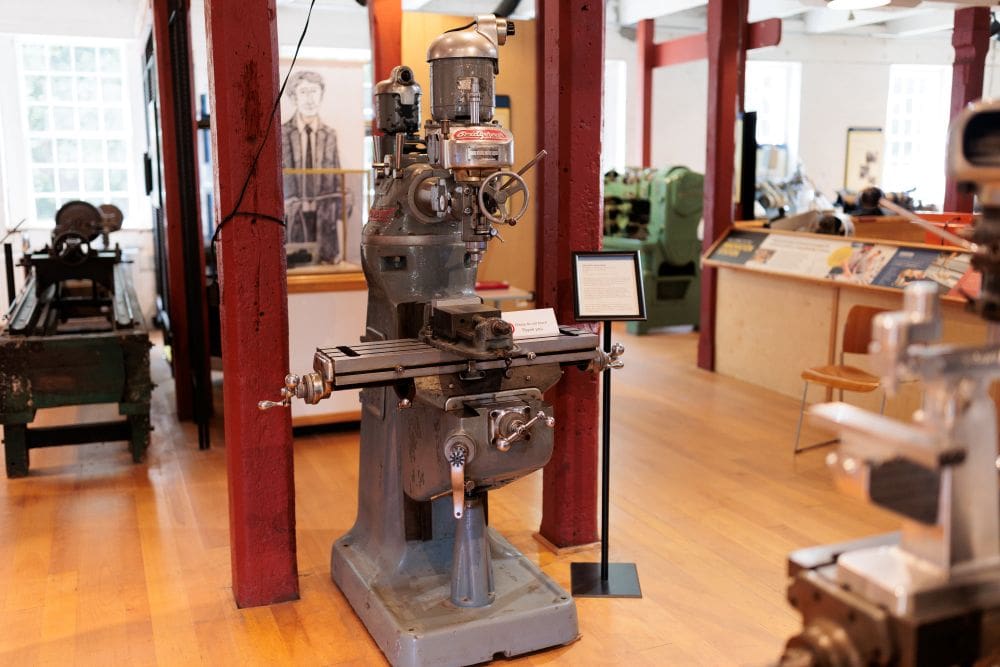
Full-length shot of Serial No. 1 on the museum floor.
From one to almost half a million
How fast it grew
1923
Bannow joins the Bridgeport Pattern & Model Works and works his way up the ranks.
1927
Bannow buys the Bridgeport Pattern & Model Works outright.
1929
Wahlstrom joins Bannow. The plan: an electric hedge clipper.
1932
First Universal Milling Attachment ships, to Atlas Tool of Bridgeport.
1938
Aug 8: Serial No. 1 ships to Precision Castings Corp., Syracuse, NY. Price: $995.
1939
Patent filed for the turret milling machine. The pattern-making business is sold, and the firm incorporates as Bridgeport Machines Inc.
1945
The 5,000th Bridgeport mill sells, just six and a half years after the first.
1948
No. 10,000 sells, in under four more years.
1953
Bridgeport starts a profit-sharing plan for its employees.
1954
The 20,000th Bridgeport ships.
1959
Adcock & Shipley is licensed to build Bridgeports in England.
1960
June 6: the 50,000th Bridgeport comes off the assembly line.
1962
Rudy Bannow dies suddenly at 65. Magnus Wahlstrom becomes president.
1963
Bridgeport hires its 500th employee and holds its first open house.
1967
The 100,000th Bridgeport milling machine comes off the line.
1968
Textron acquires Bridgeport Machines Inc.
1970
Nearly 140,000 built. The all-new Series II debuts at the Chicago Machine Tool Show.
1982
Serial No. 1 arrives at the American Precision Museum. The same year, a recession cuts U.S. machine tool sales from $5 billion to under $2 billion; Bridgeport starts importing Brazilian-made lathes to diversify.
1985
Management, led by Joseph Clancy, buys a 67% stake for $77 million in a leveraged buyout, days before hourly workers unionize.
1994
Bridgeport goes public on NASDAQ, raising $12.9 million, right as a U.S. machinery boom takes hold.
2004
Hardinge Inc. acquires Bridgeport Machines.
2023
InCompass acquires Bridgeport from Hardinge. It’s the current owner.
Provenance
How Serial No. 1 came home
The man behind the sketch
Rudolph F. Bannow
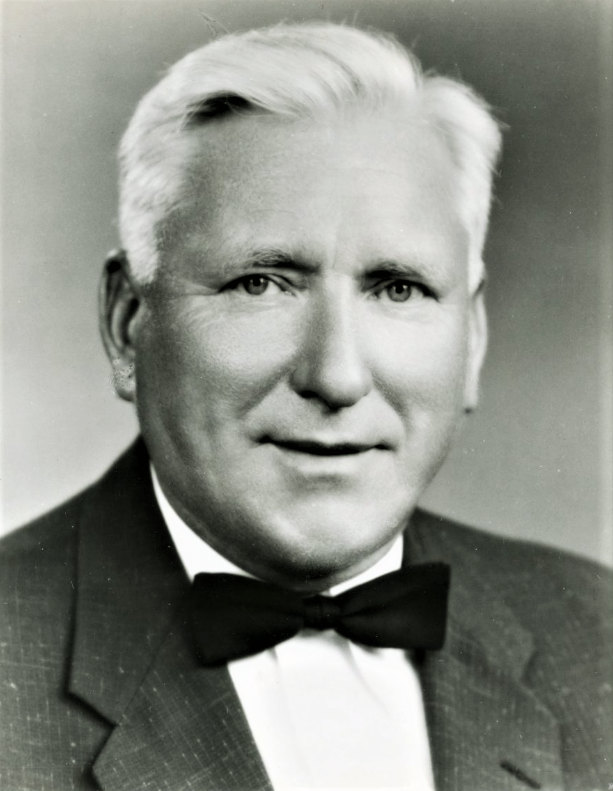
Rudolph “Rudy” Bannow
April 15, 1897, Gothenburg, Sweden — June 23, 1962, Easton, Connecticut
Bannow left Sweden for the U.S. at 13 to join family in Massachusetts. He apprenticed as a patternmaker, joined Bridgeport Pattern & Model Works in 1923, became foreman at 23, then bought the company outright in 1927.
He ran Bridgeport Machines Inc. until his sudden death in 1962, by which point he’d also served as head of the National Association of Manufacturers. Magnus Wahlstrom, his partner of 33 years, took over as president the following month.
Museum object label
“After its introduction in 1938, the Bridgeport mill became a machine tool icon, imitated and used around the world. The spindle that holds the cutting tool can be aligned in different positions—an adjustability that made the Bridgeport-style machine the most widely used and popular milling machine of the twentieth century.”
Milling Machine, Bridgeport Pattern & Model Works, Bridgeport, Connecticut, 1938. Gift of Bridgeport Machine, Division of Textron.
stay up to date
Want more content from the American Precision Museum?
Sign up to receive news straight to your inbox!
By submitting this form, you are consenting to receive marketing emails from: . You can revoke your consent to receive emails at any time by using the SafeUnsubscribe® link, found at the bottom of every email. Emails are serviced by Constant Contact