Blog
From Brook to Belt: Powering the Armory
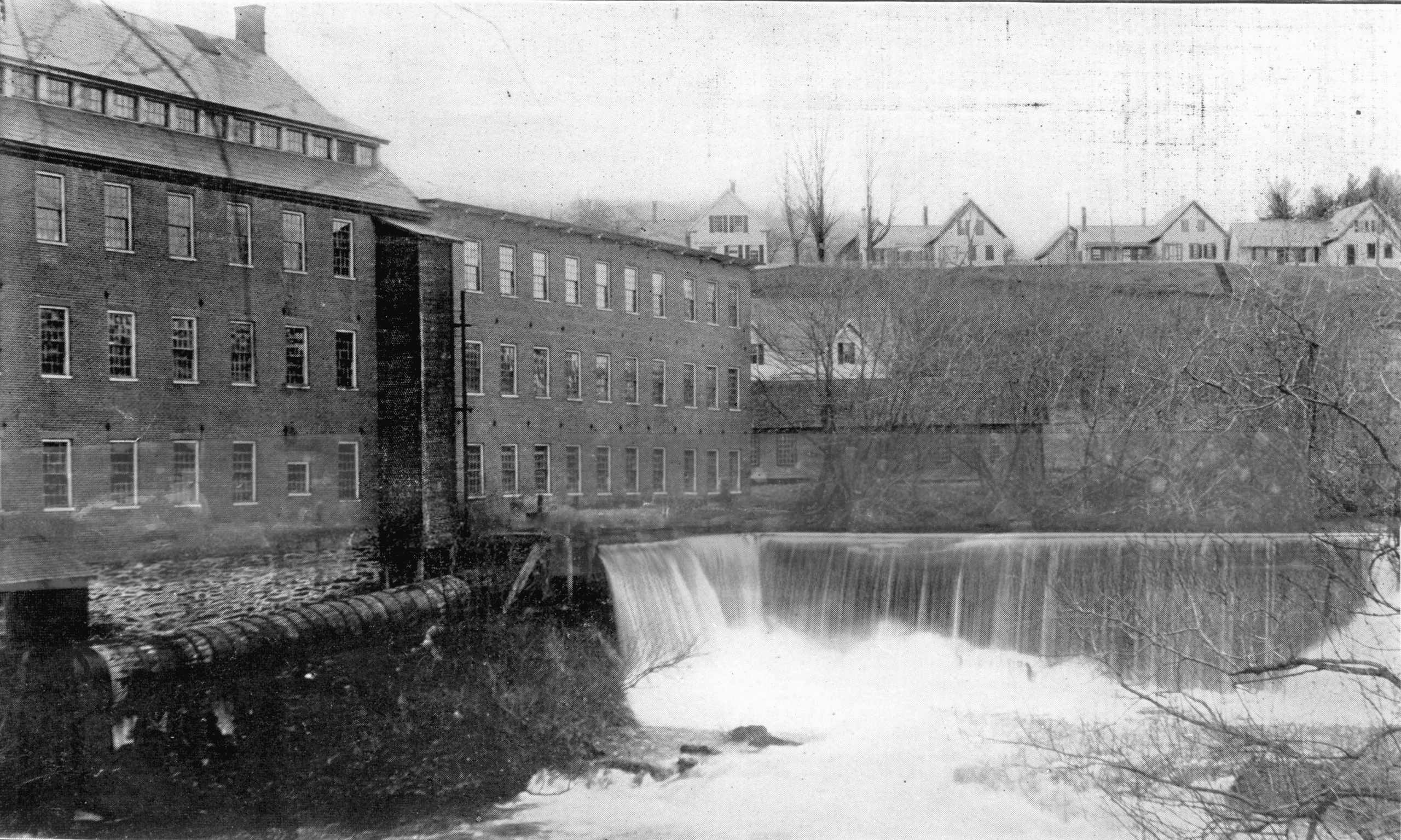
“Visitors to the American Precision Museum often ask: “Is the waterwheel still here?” The short answer: no.
What remains is the wheel pit in the basement and two massive diagonal braces that supported part of the power train. The wheel itself is gone, but its story is an important part of the Armory’s history.
Written by John Alexander, Collections Technician
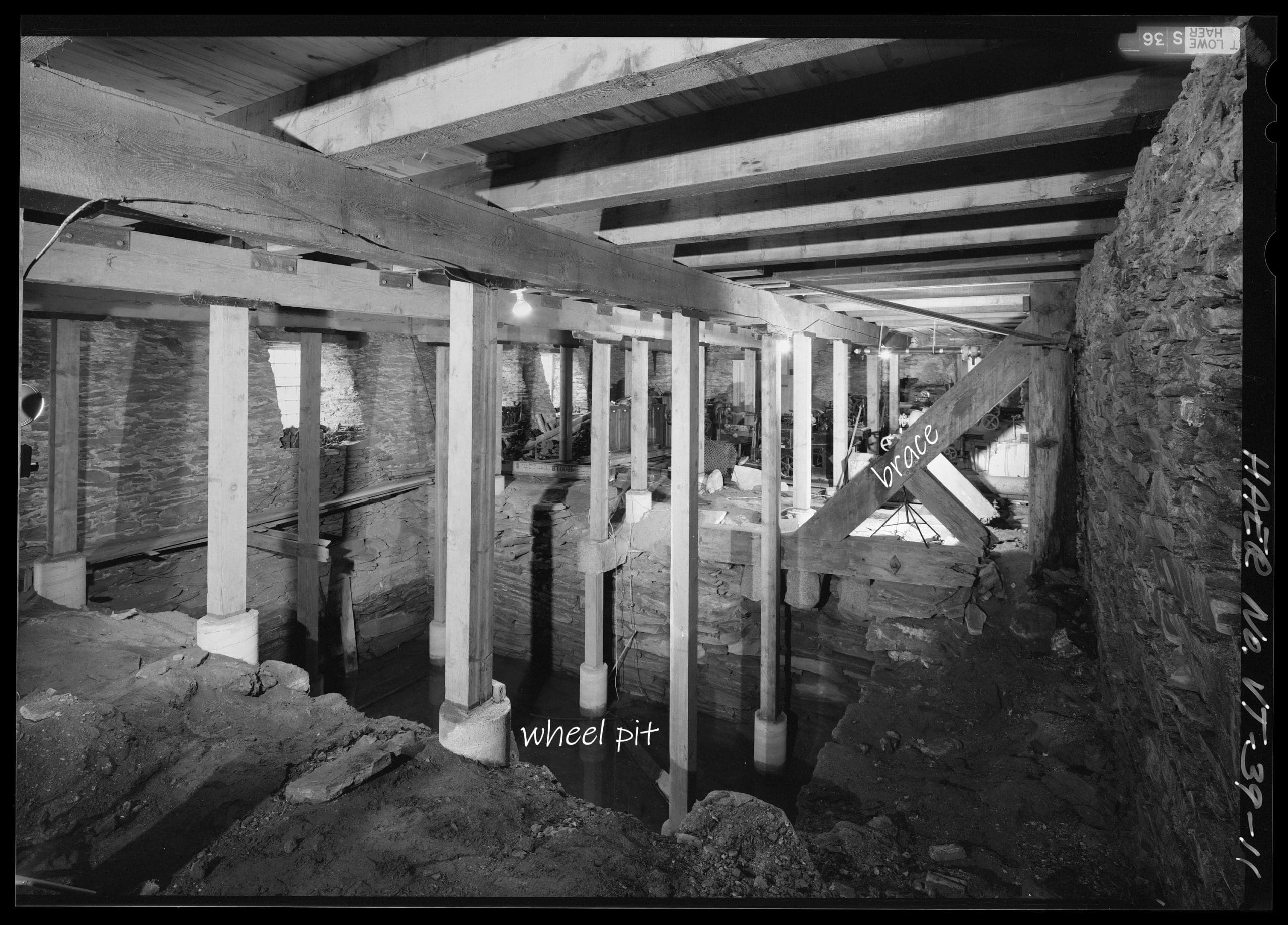 The wheel pit in the basement of the Armory building. This is where the waterwheel once sat, converting water from the brook into mechanical energy.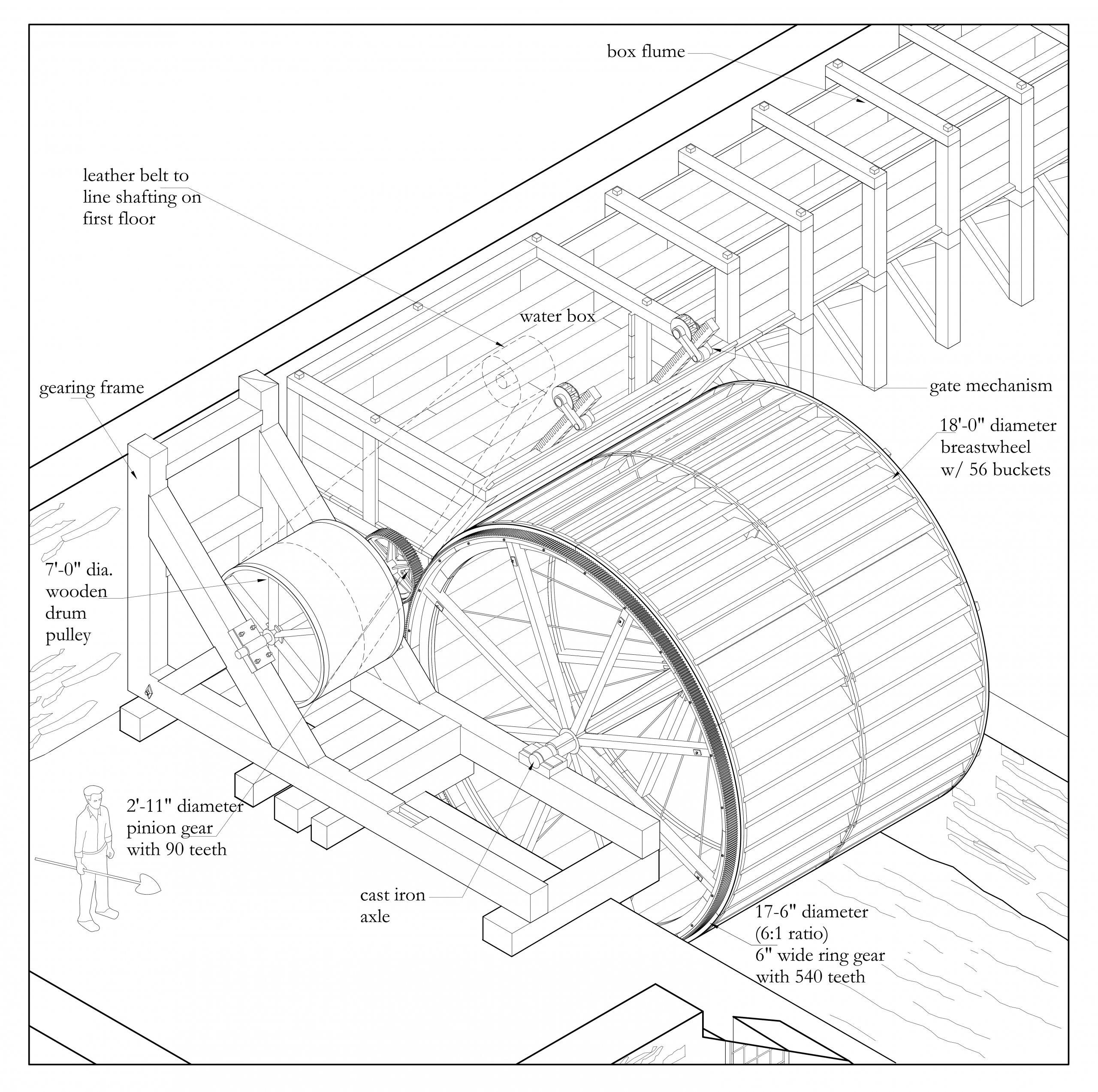
That smaller gear was attached to a large wooden pulley about 7 feet wide. A belt from the pulley ran to the lineshafting near the first-floor ceiling, and smaller belts carried the power throughout the building. Even smaller countershafts then transmitted the motion directly to the machines.
Water for the wheel came from the brook just above the current waterfall, controlled by a dam. The flow traveled through a trench across the yard, made a left turn, and entered the building, eventually reaching the wheel through a deep wooden trough called a waterbox. The wheel itself was a breast wheel, striking the water slightly above its center. Water then flowed down and under the wheel before exiting through a long pit back into the brook.
Over time, the wheel pit was filled with debris and dirt, but was excavated to its full depth in the 1980s and early 1990s. However, even at full flow, the brook was not always reliable, especially in dry weather. A hydraulic engineer estimated that the wheel could produce no more than about 30 horsepower—a modest output for industrial use.
By 1849, just three years after the Armory was built, the railroad arrived, and the building installed its first steam engine. Waterpower wasn’t abandoned immediately, though. The Armory later installed a more efficient turbine in a shed on the brook side of the building. Water from the dam was delivered to the turbine through a penstock, a pipe made like a barrel with staves and metal hoops.
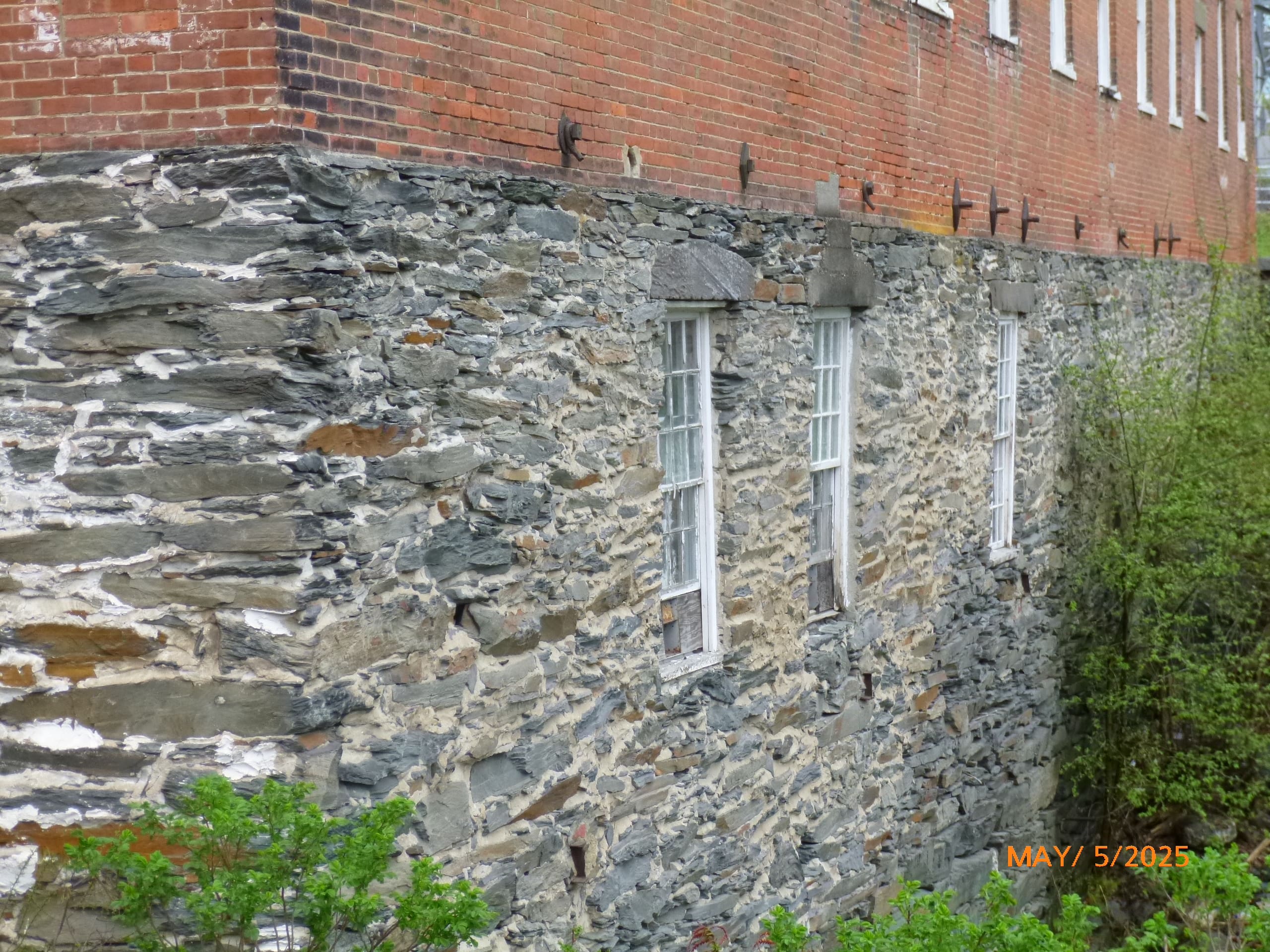 These iron fasteners on the wall once held the turbine shed in place at the front corner of the Armory building. Historic image showing the turbine installation and water infrastructure.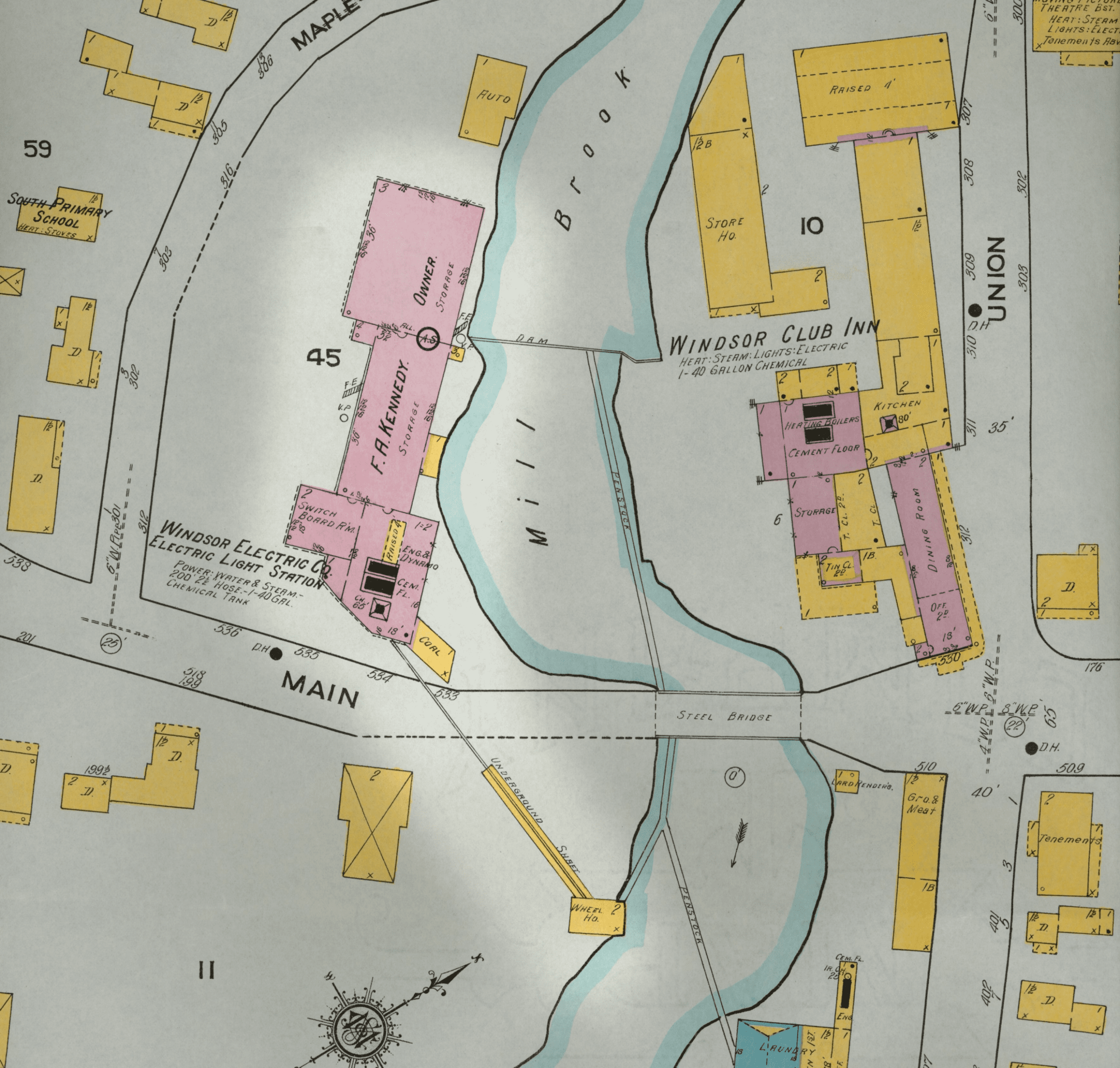
The tunnel and shaft connecting the grist mill across Main Street to the Armory basement is visible on this 1917 Sanborn map.
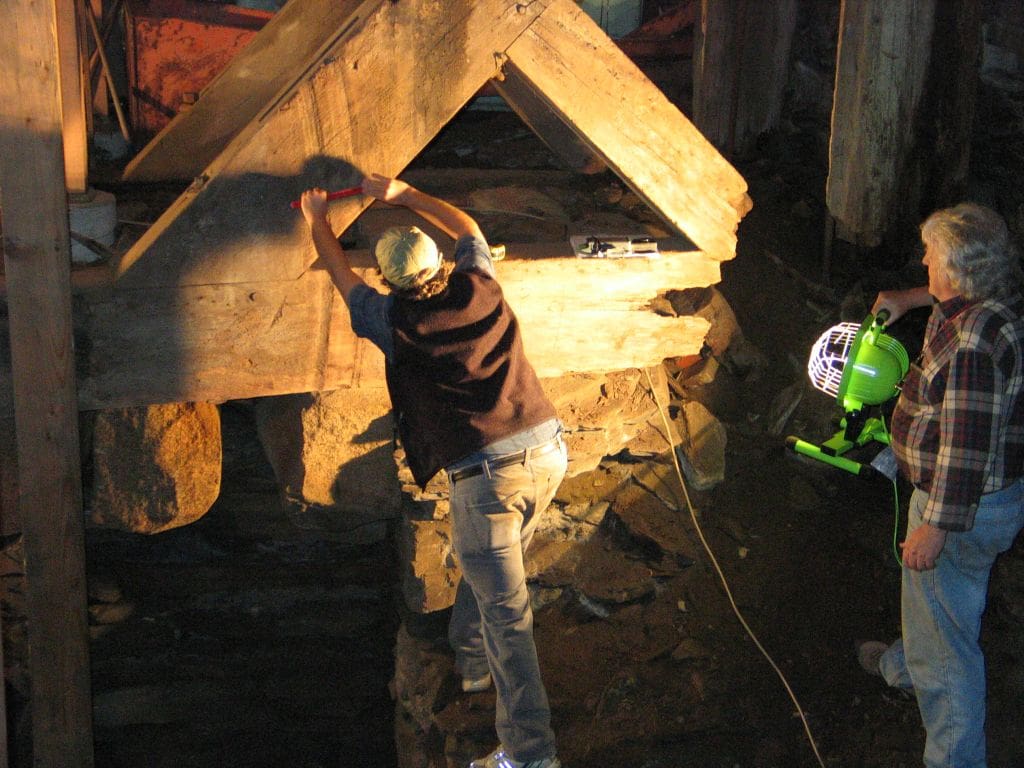 Gouge marks on a basement timber may have led some sources to estimate a larger diameter for the original waterwheel.
Finally, a note about the waterwheel’s size: some earlier accounts suggest a diameter of 18 feet. Our research and measurements indicate 16 feet, which fits the space between the axle support and the ceiling. The larger figure may come from gouge marks on remaining timbers—possibly caused by a loose gear segment rather than the wheel itself. The story of the waterwheel reminds us that innovation often involves trial, adaptation, and improvement. From the original wooden wheel to the more efficient turbine, the Armory’s early waterpower system is a testament to the ingenuity and precision that continues to inspire at the American Precision Museum.
stay up to date
Want more content from the American Precision Museum?
Sign up to receive news straight to your inbox!
By submitting this form, you are consenting to receive marketing emails from: . You can revoke your consent to receive emails at any time by using the SafeUnsubscribe® link, found at the bottom of every email. Emails are serviced by Constant Contact